Spoiler alert: that magic cut-off birthday you're dreading doesn't actually exist
It takes longer now. Maybe it's not as firm as it used to be and you're lying there wondering if you’re just getting old or you’ve lost your john’s mojo.
If it helps, here’s the truth nobody tells you: there is no cut-off age. Many say that when you get to this or that age, you will lose your sex drive or your willy won’t get hard anymore. But that’s not how it works.
“If every guy suddenly experienced total erectile dysfunction at the exact same age, you'd have already heard about it.” - Cooldude-4000
Plenty of men stay sexually active into their 70s, 80s, and beyond. Yes, erections change over time, but these are usually caused by something that you can deal with.
Let's talk about what's normal, what's not, and when it's worth calling your doctor.
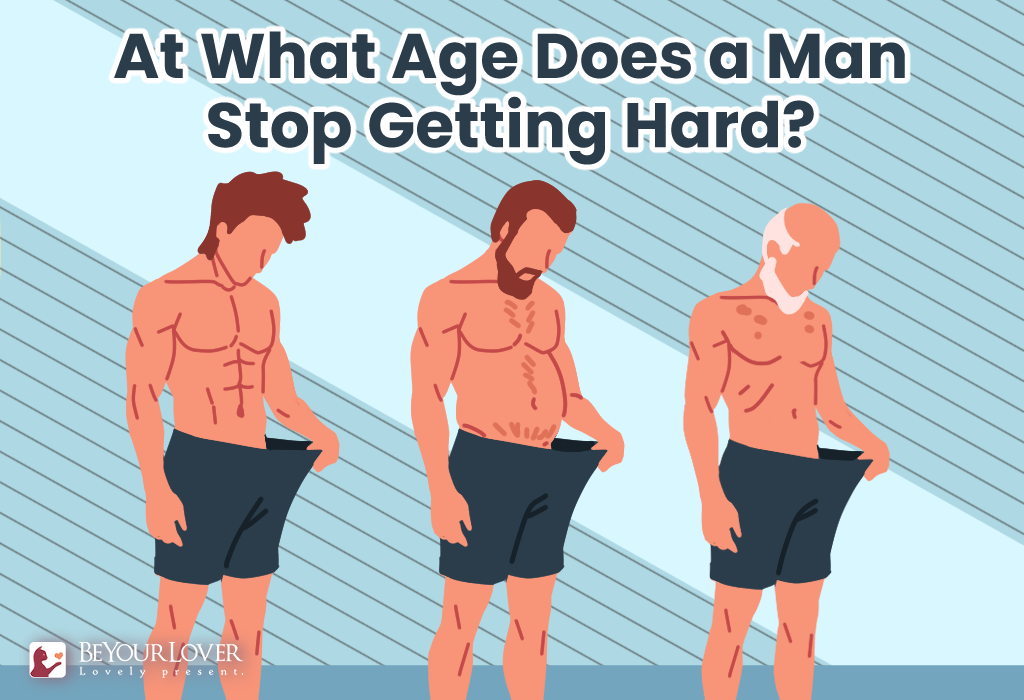
At What Age Does a Man Stop Getting Hard?
The short answer is there is no set age.
As already mentioned, erections get softer and slower with age, but most men can still get erect well into their 70s and beyond, often with some help. Also, it doesn’t mean that youngsters can’t get erectile dysfunction. They can too.
No study has ever found a birthday where erections switch off. What research does show is a slow slide. Firmness drops bit by bit, not all at once.
Erectile dysfunction (ED) becomes more common from about age 40 on, and the rates climb faster through the 60s and 70s. And even if you reach this age, it doesn’t mean that you can’t have sex anymore. All you need is more time, more touch, and sometimes a pill, a pump, or a ring.
Now I know you’re getting curious on how this happens. So, let's unpack what's going on down there.
Related: How Many Erections Do Men Have in a Day?
What Getting Hard Looks Like as You Age
If ever your john has gotten soft, it doesn’t mean your sexual mojo is gone. It’s still there.
Since most men’s penis is in its prime in 20s to 30s, we’ll start describing the typical signs to watch out for once you hit the 40s.
Age 40
Boston University Sexual Medicine pulled together the numbers on how common ED is.
Moderate to complete ED runs about 22% at age 40 and climbs to about 49% by age 70. The same source notes that roughly 10% of men aged 40 to 70 deal with severe or complete ED. In other words, at 40, one man in five already notices a real change.
Another study found that both new cases and severity go up about three-fold between 40 and 70. For every one man with ED at 40, there are about three at 70. Still not everyone. Not even close to everyone.
Ages 60 to 69
Now here’s the twist, the rate climbs with age right up to the 60 to 69 bracket. The causes are usually not on the ability to get hard again but usually on other things like less desire to have sex with a partner, fewer partners, and a bigger focus on other health issues.
Age 70 and Up
About half of 70-year-olds report moderate to complete ED. Flip that around: about half don't.
Work in Sexual Medicine Reviews backs the same pattern across many studies. Rates rise with age, but they never hit 100%.
“I’m 60 and have taken pills to help me with my ED. My wife and i have had a 3sum with the same man for years and he is now closer to 70 and has always had zero issues getting hard” - ILhotbicouple
Why Does It Happen?
It may appear that age has something to do with it but it is rarely the reason.
To understand why, you need to know why you get hard. To get an erection you need a good blood flow to the penis, clear nerve signals from brain to the body, and good hormone balance (mostly, testosterone).
Age can be a factor, but the underlying conditions are the most typical culprits. And these health conditions affect the penile tissue, causing the penis to hold less blood than it used to.
They can also narrow arteries and send in less blood. Less blood means less pressure, and less pressure means less firmness.
Signals from the brain to the groin travel slower. That's why touch matters more than thoughts and fantasies now. Also, testosterone slides about 1% a year after 30. Low levels hit your drive first, your firmness second.
Changes in the blood affect nitric oxide, the small molecule that tells penile vessels to open up.
Health Issues That Can Make Getting Hard Tougher
- Heart disease and high blood pressure
- Diabetes
- High cholesterol and extra belly fat
- Sleep apnea and poor sleep
- Prostate surgery
- Pelvic radiation
- Spine problems
Therefore, if you find yourself having difficulty getting hard, take it as a sign of an underlying health condition that needs a checkup. Heart issues, for example, can show up here years before any chest symptoms.
Do not panic, think that a visit to your doctor can protect your health and your sex life at once.
Meds and Habits
Some common drugs can soften erections: certain blood pressure meds, antidepressants, some allergy pills, opioids, and finasteride. Smoking, heavy drinking, weed, and stimulants all play a part too.
Never stop a prescription. Talk to your doctor and ask for an alternative or a lower dosage.
What Helps, Ranked by Effort
Being at the soft stage of your life doesn’t mean your sex life is over. It just means making a few lifestyle changes or using a little help so you don’t lose your bedroom mojo.
1. Aim for Healthy Habits First
Move 30 minutes most days. Walking is important as leg and hip work helps blood flow the most. Sleep is also essential.
Remove the vices: Quit smoking and limit the alcoholic drinks.
Trim your waist. Belly fat lowers testosterone and raises blood pressure. Get blood sugar and blood pressure in range with your doctor's help.
These sound boring. They also work better than most things you can buy.
2. Pelvic Floor Training
Kegels work the muscles that trap blood inside the penis. Squeeze for 5 seconds, rest for 5, do ten reps. Do it three sets a day.
3. Aids You Can Use Tonight
Sex toys can help too:
Cock rings
Cock rings slow down blood outflow, keeping you firmer for longer. Use the one with stretchy material, especially if you’re a beginner, and cap it at 20 to 30 minutes.
Penis pumps
Suction draws blood into the penis. These are well documented for ED and for recovery after prostate surgery. Pair one with a ring for better results. A gentle pressure and short sessions beat brute force, every time.
4. Positions and Pacing That Work With Softer Erections
Pick positions where the penis stays supported and the angle is shallow. Spooning and side-by-side both fit.
Slow the entry. Stretch out the foreplay. Keep hands and mouth in the mix.
Use lube always. Thinner tissue and less natural slip make friction a bigger deal than it used to be.
5. Medical Options
This is worth asking your doctor about. Your doctor can recommend different ways to help with your situation, such as PDE5 pills, a testosterone test, injections, urethral suppositories, shockwave therapy, and even implants. Note: do not self-medicate.
Sex therapy or couples counseling helps a lot too.
6. Do Not Use Sketchy Products
You can’t trust gas-station packets and male enhancement pills with no label. Anything that promises your teenage erections back without FDA approval.
FAQ: Common Questions Men Ask About Erections and Age
At what age do most men start to notice changes?
Many men start to notice small changes in their late 30s or 40s: fewer morning erections, slower arousal, or less firmness. By 50–60, these changes are more clear for a lot of men. But there is no magic cutoff age.
Even those in their 20s or 30s can experience erectile dysfunction. Dr. Justin Houman explains it in this video:
Is it normal to sometimes go soft during sex?
Yes. Even young men in their 20s lose erections at times due to stress, alcohol, or lack of sleep. It becomes more common with age. If it happens often and bothers you, it is worth talking with a doctor and trying tools like rings or pumps as support.
Will using a cock ring or pump make my body lazy?
No. They do not damage your body if used as directed. In fact, for some men, pumps can help train blood flow, and rings can cut anxiety so much that natural erections improve over time.
Does porn use affect erections as I get older?
For some men, yes. Very intense or long-term porn use can shape what your brain needs in order to feel turned on. Cutting back or taking a break can help your brain respond more to real touch, smell, and sound in the room with your partner.
Can I ever get “young guy” erections back?
You may not feel exactly like you did at 18, but many men in their 50s, 60s, and beyond get strong erections with a mix of health changes, medical treatment, and smart tools. Your goal is not to be a teen again; your goal is to have a sex life that feels full, fun, and stress-free now.
Is it safe to buy ED pills online?
Be very careful. Many pills from untrusted online shops or gas stations contain unknown drugs or doses. This can be unsafe for your heart. It is far safer to speak with a doctor and use approved meds, then add legal toys and devices from trusted shops.
What if my partner has a lower sex drive than me?
This guide is about your erections, but your partner’s desire also matters. Soft toys, massage, and slower build-up can help. Couples toys from beyourlover.com (like vibrating rings or clitoral toys) can help your partner feel more eager, even if they are tired or stressed.
Special Thanks To:
Boston University Medical Campus
Ian Eardley - Urologist - Sexual Medicine Reviews
Dr. Justin Houman - Urologist - HoumanMD l Cedars-Sinai l Men's Health Unlocked
Cooldude-4000
ILhotbicouple
Want to learn more about keeping a strong sex life as you age? Read our guides to exotic sex positions to connect with your partner, penis massage, and erotic massage for couples.
For More Info:
How Often Do Married Couples Have Sex